


![Chilika lake is a brackish water lagoon, spread over the Puri, Khurda and Ganjam districts of Odisha state on the east coast of India, at the mouth of the Daya River, flowing into the Bay of Bengal, covering an area of over 1,100 km2. It is the largest coastal lagoon in India and the second largest lagoon in the world[3][4][dubious – discuss] after The New Caledonian barrier reef in New Caledonia.
It is the largest wintering ground for migratory birds on the Indian sub-continent. The lake is home to a number of threatened species of plants and animals.
The lake is an ecosystem with large fishery resources. It sustains more than 150,000 fisher–folk living in 132 villages on the shore and islands.
The lagoon hosts over 160 species of birds in the peak migratory season. Birds from as far as the Caspian Sea, Lake Baikal, Aral Sea and other remote parts of Russia, Kirghiz steppes of Mongolia, Central and southeast Asia, Ladakh and Himalayas come here. These birds travel great distances; migratory birds probably follow much longer routes than the straight lines, possibly up to 12,000 km, to reach Chilika Lake.
In 1981, Chilika Lake was designated the first Indian wetland of international importance under the Ramsar Convention.
According to a survey, 45 percent of the birds are terrestrial in nature, 32 percent are waterfowl, and 23 percent are waders. The lagoon is also home to 14 types of raptors. Around 152 rare and endangered Irrawaddy dolphins have also been reported. Plus, the lagoon supports about 37 species of reptiles and amphibians.
The highly productive chilika lagoon eco-system with its rich fishery resources sustains the livelihood for many fisher men who live in and near the Lagoon. The water spread area of the Lagoon ranges between 1165 and 906 km2 during the monsoon and summer respectively. A 32 km long, narrow, outer channel connects the lagoon to the Bay of Bengal, near the village Motto. More recently a new mouth has been opened by CDA which has brought a new lease of life to the lagoon.
Microalgae, marine seaweeds, sea grasses, fishes and crabs also flourish in the brackish water of the Chilika Lagoon. Especially the recovery of sea grass beds in recent years is a welcoming trend which may eventually result in re-colorizations of endangered dugongs.](https://images.trvl-media.com/place/553248621562261891/1e8fd9af-7b1f-490e-95b1-2f9fb2318e30.jpg?impolicy=fcrop&w=600&h=400&p=1&q=medium)
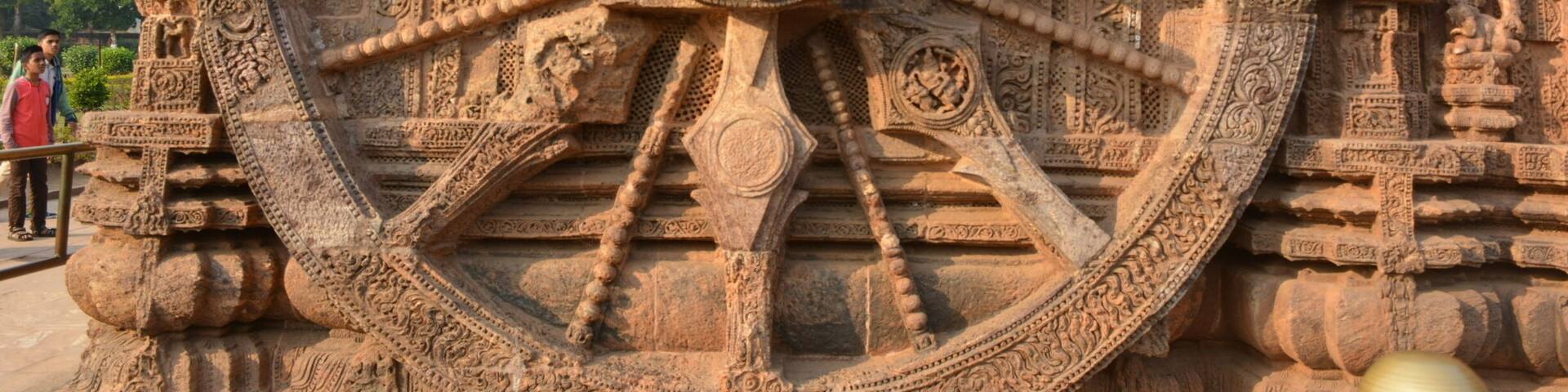
![Konark Sun Temple is a 13th-century CE Sun Temple at Konark in Orissa, India. It is believed that the temple was built by king Narasimhadeva I of Eastern Ganga Dynasty[2] in 1255 CE.[3] The temple complex is in the shape of a gigantic chariot, having elaborately carved stone wheels, pillars and walls. A major part of the structure is now in ruins. The temple is a UNESCO World Heritage Site[4] and has also featured on various list of Seven Wonders of India. The temple is 35 km from Puri and 65 km from Bhubaneswar.
The name Konark derives from the combination of the Sanskrit words, Kona (corner or angle) and Ark (the sun), in reference to the temple which was dedicated to the Sun God Surya.[4]
The monument was also called the Black Pagoda'(Kaala Pagoda) by the European sailors. In contrast, the Jagannath Temple in Puri was called the White Pagoda. Both temples served as important landmarks for the sailors.[5] Konark Sun Temple used Iron beams for its structure.
The temple was originally built at the mouth of the river Chandrabhaga, but the waterline has receded since then. The temple has been built in the form of a giant ornamented chariot of the Sun god, Surya. It has twelve pairs of elaborately carved stone wheels which are 3 meters[4] wide and is pulled by a set of seven horses (4 on the right and 3 on the left).[6] The temple follows the traditional style of Kalinga architecture. It is carefully oriented towards the east so that the first rays of sunrise strikes the principal entrance.[4] The temple is built from Khondalite rocks.[7][8]
The original temple had a main sanctum sanctorum (vimana), which was supposedly 229 feet[6] (70 m) tall. Due to the weight of the superstructure (70 m tall) and weak soil of the area, the main vimana fell in 1837.[9] The audience hall (Jagamohana), which is about 128 feet (39 m) tall, still stands and is the principal structure in the surviving ruins. Among the structures, which have survived to the current day, are the dance hall (Nata mandira) and dining hall (Bhoga mandapa).[4][6]
The Konark temple is also known for its erotic sculptures of maithunas.[10]
Two smaller ruined temples have been discovered nearby. One of them is called the Mayadevi Temple and is located southwest from the entrance of the main temple. It is presumed to have been dedicated to Mayadevi, one of the Sun god's wives. It has been dated to the late 11th century, earlier than the main temple.[11] The other one belongs to some unknown Vaishnava deity. Sculptures of Balarama, Varaha and Trivikrama have been found at the site, indicating it to be a Vaishnavite temple. Both temples have their primary idols missing.
A collection of fallen sculptures can be viewed at the Konark Archaeological Museum which is maintained by the Archaeological Survey of India.](https://images.trvl-media.com/place/6156018/09fea146-89a8-4536-94db-75e3922ba387.jpg?impolicy=fcrop&w=600&h=400&p=1&q=medium)


Travel to historical Odisha
Come and experience Odisha and its temples, history and musicals. Renowned for its dolphin watching, ecotours and archaeology, this city welcomes all visitors. With a holiday rental, you get a home away from home – many rentals offer full kitchens and outdoor grills for some home cooking.
Activities and attractions in and around Odisha
Are you hoping to discover top things to see and do while you're in town? Venture out of your holiday home and check out everything that makes Odisha a fun place to get away to. Here are some of the most popular attractions to see, all within 30 miles (48.2 km) of the city centre:
- Ocean World Water Park (7.1 mi / 11.5 km)
- Nandankanan Zoological Park (9.6 mi / 15.5 km)
- Qadam-I-Rasool (0.6 mi / 1 km)
- Ashokan Rock Edict (2.7 mi / 4.3 km)
Exploring the natural landscape of Odisha
Whether you're looking for adventure or just want to take in the scenery, you'll be sure to find the perfect setting for your holiday in Odisha. Here are a few of the area's most stunning natural features, all within 30 miles (48.2 km) of the city centre:
- Bindu Sagar (1.3 mi / 2.1 km)
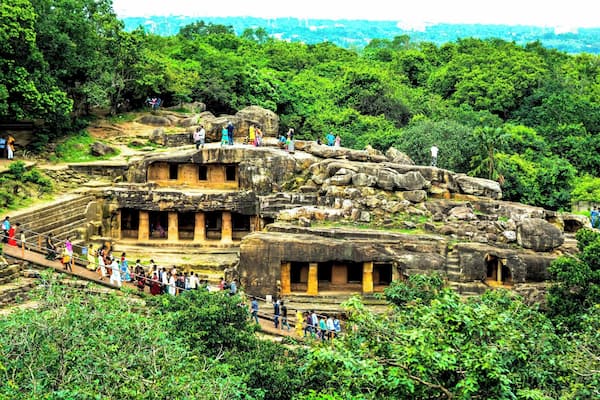
- Udayagiri and Khandagiri Caves (3.5 mi / 5.6 km)
- Buddha Jayanti Park (4.9 mi / 7.8 km)
- Ekamra Kanan (3.9 mi / 6.3 km)
- Barabati Fort (15.6 mi / 25.2 km)
- Daya River (9.6 mi / 15.4 km)
How to get to and around Odisha
The nearest airport is in Bhubaneshwar (BBI-Biju Patnaik), located 1.6 mi (2.6 km) from the city centre.
If you prefer to travel by train, Bhubaneswar Station, Mancheswar Station and Retang Station are the main stations in the city.